
.
Success Story – Al-Khalil Camp: From Hardship to a More Dignified Life
NAHRThursday, 01 January, 1970
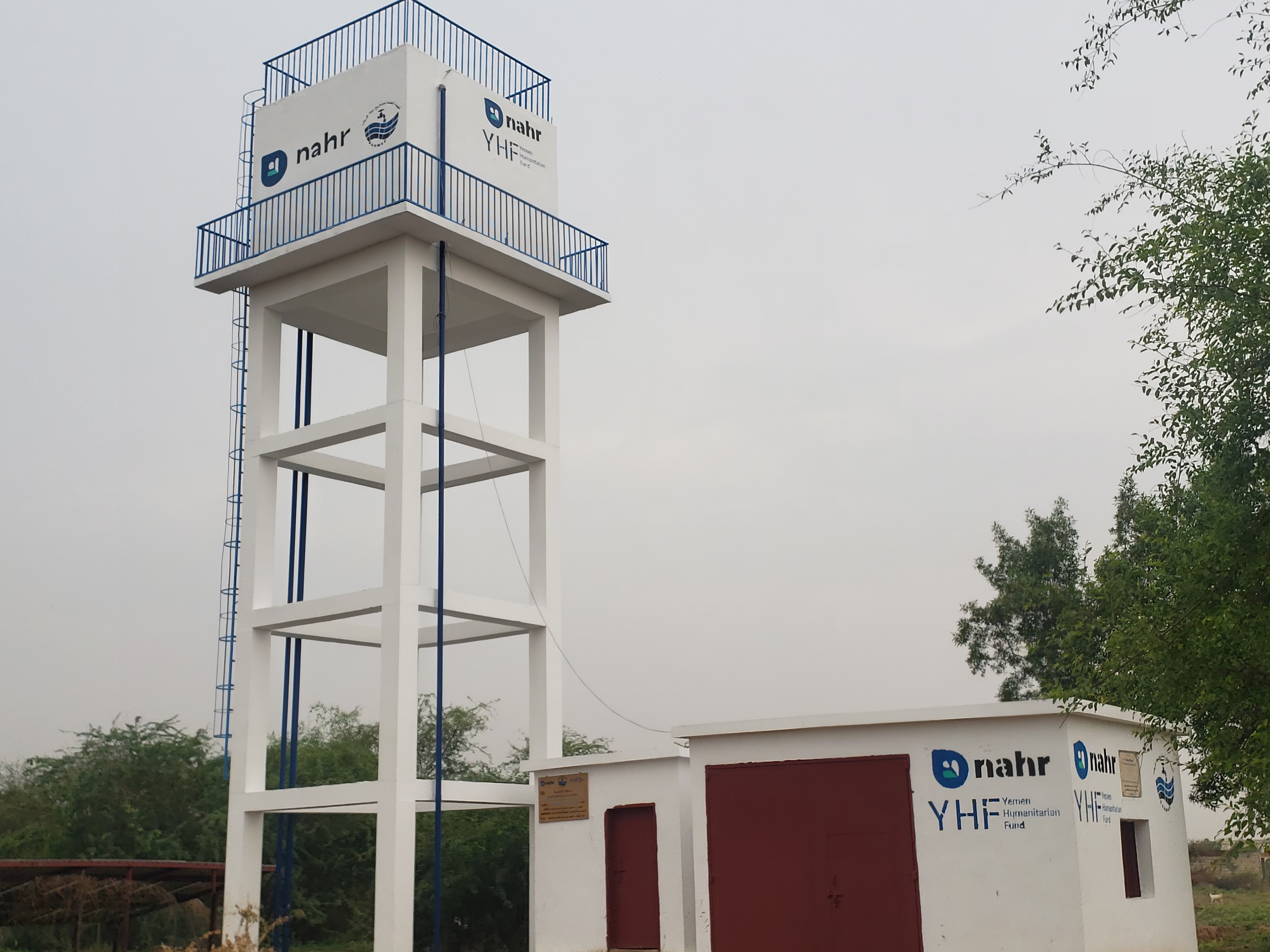
In the village of East Al-Khalil, in Al-Qana'was District, Al-Khalil Camp endured a difficult period. Displaced families arrived seeking safety but collided with a harsh daily obstacle: accessing water.
Women walked long distances to fetch water, and children fell ill due to contaminated water.
One mother recounts:
"Every morning we woke up thinking about water before anything else."
The lack of hygiene compounded people's suffering. Skin diseases and diarrhea spread widely, and many families lacked basic tools to protect their children. Anxiety grew with food shortages and poor health services.
The National Foundation for Development and Humanitarian Response (NAHR), funded by the Yemen Humanitarian Fund (YHF)intervened in the area at the beginning of the year when families then began receiving water daily and regularly after support was provided to the distribution network. The tank, which had remained empty for a long time, began to fill every day. The well was sterilized for six months, restoring people's trust in the water they drink.
One camp resident says:
"For the first time in years, I turn on the tap and find clean water that is enough for us."
The organization distributed hygiene kits to every family and began awareness sessions for women, men, and children. The sessions focused on handwashing, water handling, and safe storage methods.
Within weeks, results appeared in the camp. Children stopped playing near stagnant water. Mothers taught their children simple and easy health habits.
The distribution of unconditional cash grants alleviated a significant burden. Some families bought food, while others bought medicine. Each family made the decision that suited them.
One father says:
"The cash assistance made me feel I could take care of my family."
The NAHR team faced challenges during implementation, especially during the rainy season and due to the camp's poor infrastructure, in addition to varying levels of health awareness among the population. However, these obstacles were overcome by working with community leaders, repeating awareness sessions, and ensuring health messages reached everyone.
Life gradually changed. Water-related diseases disappeared. Hygiene improved. People felt their environment was safer and that they were able to protect their children.
Today, the camp has changed. The place that suffered for years has become a more stable community. The project restored people's peace of mind.
The camp residents recount their experience, saying the beginning of the transformation was a drop of water that arrived at the right time.
Women walked long distances to fetch water, and children fell ill due to contaminated water.
One mother recounts:
"Every morning we woke up thinking about water before anything else."
The lack of hygiene compounded people's suffering. Skin diseases and diarrhea spread widely, and many families lacked basic tools to protect their children. Anxiety grew with food shortages and poor health services.
The National Foundation for Development and Humanitarian Response (NAHR), funded by the Yemen Humanitarian Fund (YHF)intervened in the area at the beginning of the year when families then began receiving water daily and regularly after support was provided to the distribution network. The tank, which had remained empty for a long time, began to fill every day. The well was sterilized for six months, restoring people's trust in the water they drink.
One camp resident says:
"For the first time in years, I turn on the tap and find clean water that is enough for us."
The organization distributed hygiene kits to every family and began awareness sessions for women, men, and children. The sessions focused on handwashing, water handling, and safe storage methods.
Within weeks, results appeared in the camp. Children stopped playing near stagnant water. Mothers taught their children simple and easy health habits.
The distribution of unconditional cash grants alleviated a significant burden. Some families bought food, while others bought medicine. Each family made the decision that suited them.
One father says:
"The cash assistance made me feel I could take care of my family."
The NAHR team faced challenges during implementation, especially during the rainy season and due to the camp's poor infrastructure, in addition to varying levels of health awareness among the population. However, these obstacles were overcome by working with community leaders, repeating awareness sessions, and ensuring health messages reached everyone.
Life gradually changed. Water-related diseases disappeared. Hygiene improved. People felt their environment was safer and that they were able to protect their children.
Today, the camp has changed. The place that suffered for years has become a more stable community. The project restored people's peace of mind.
The camp residents recount their experience, saying the beginning of the transformation was a drop of water that arrived at the right time.